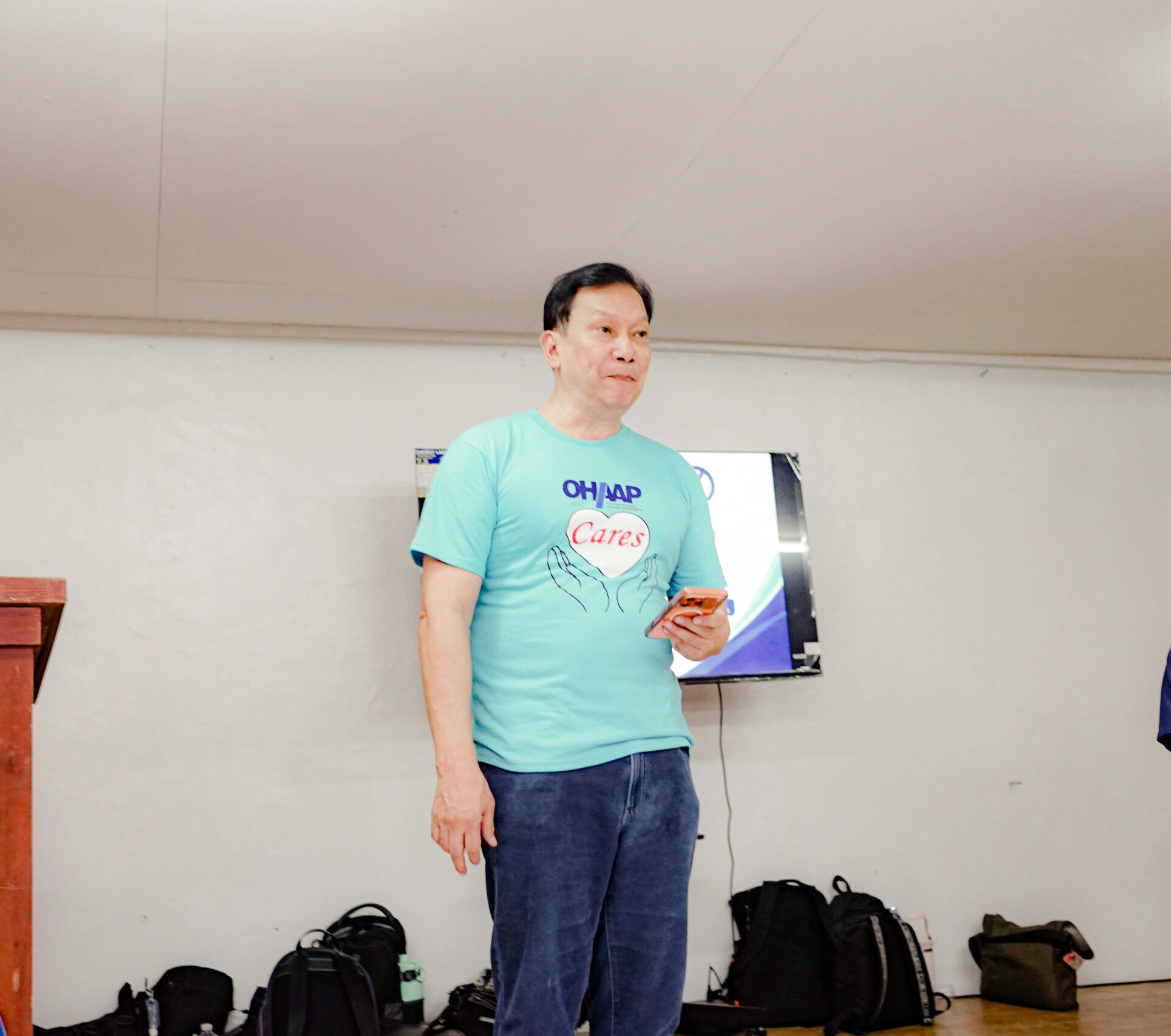
In an industry built on visibility, Jun Neri wants people to see something more than just the signs. As president of the Out of Home Advertising Association of the Philippines (OHAAP)—a pioneering organization now in its sixth decade—Neri is steering the country’s OOH sector toward a future where commercial success and social conscience are inseparable.
For Neri, that philosophy finds its clearest expression in OHAAP’s Corporate Social Responsibility programs, which have grown into one of the association’s most defining commitments. “Our medical missions and other CSR initiatives, scholarships, environment projects like tree planting, sports socials, are not just simple outreach activities. They are a testament to OHAAP’s long-term commitment to uplift the communities we serve,” shares the OHAAP president.
The distinction matters to him. These are not one-day photo opportunities staged for goodwill. OHAAP’s CSR calendar is deliberate and sustained—free circumcision services, feeding programs, and medical missions targeting the elderly are timed strategically for the summer months, when community need tends to peak. “We provide direct, practical support to our less fortunate brothers and sisters,” Neri explains, framing the work not as charity, but as a structured social safety net built by an industry that understands its reach.
This initiative, including the recently conducted Operation Tuli program, was successfully implemented through the full support of the OHAAP Board of Directors, under the coordination and leadership of CSR Director Jane Canlas Laranjo, whose efforts helped ensure the program’s smooth execution and community impact.
That reach extends well beyond healthcare. Ongoing tree planting drives and scholarship support for students enrolled in four-year college courses round out OHAAP’s giving portfolio. Neri is emphatic that continuous fundraising ensures these programs don’t stall or fade between administrations.
The same sense of purpose informs how Neri approaches OHAAP’s role in the broader advertising landscape. Under his watch, the association has moved aggressively into regional engagement, bringing its expertise and resources to billboard operators across the country, including those in Mindanao. The goal is collegial: help fellow operators market more effectively, share industry knowledge, and elevate the sector.
“OHAAP has gone a long way in partnering with government and other well meaning groups to uplift the living condition of the of the people in this country. (There are plans) to go to Visayas and Mindanao to help other billboard operators market their products, that will (in turn) help brands to also move their products,” Neri shares.
Partnership with government is another cornerstone. Neri has made billboard safety and regulatory compliance a priority, working alongside public agencies to ensure that structures meet building codes and that advertisements align with existing regulations. It’s a practical expression of responsibility—the same word that threads through every dimension of his leadership.
Neri explains, “We are very particular with safety. We partner with government to ensure that all billboards are compliant with the building code. We have a proposal that, if possible, all billboards should pass through OHAAP (standards) that to ensure compliance, in the same manner that Ad Standards Council (ASC) is partnering with government to ensure that advertisements are compliant with government regulation.”
On questions of political stance, Neri is measured but clear. OHAAP, he says, is politically neutral. But neutrality does not mean indifference. The association actively advocates for transparency and what he describes as dynamic political advocacy—a commitment to holding systems accountable without taking sides.
“We are apolitical, we don’t take sides, and we avoid any political undertones getting in the way of our advocacy—but we are for transparency,” says Neri.
Sixty years on, OHAAP’s story is one of endurance and evolution. Under Jun Neri, it is also becoming a story about what an industry association can choose to stand for—not just in front of the public, on the face of a billboard, but behind the scenes, in the communities that live beneath them.
Contributing Writer: MS. AYE UBALDO